
Islamic Estate Planning
Financial strategies that align with Islamic law, also known as Syariah, to preserve, protect and distribute your assets according to your wishes upon your demise.

Wasiat writing
Record your intentions clearly
A Wasiat is a declaration made during a person’s lifetime concerning property or beneficial interests, to be carried out after death for charity or other purposes permitted by Islamic law.
Distribution of assets without a Wasiat
Without a Wasiat, a Muslim’s assets will be divided among their heirs according to Faraid, the Islamic law of inheritance.
Benefit of writing a Wasiat
Islam permits a Muslim to bequeath up to one-third of their assets through a Wasiat to loved ones who are not entitled under Faraid, including non-Muslims, or for charitable purposes in accordance with Syariah.

Importance of Wasiat under Malaysian law
How the estate process differs
Intestacy (without a Wasiat)
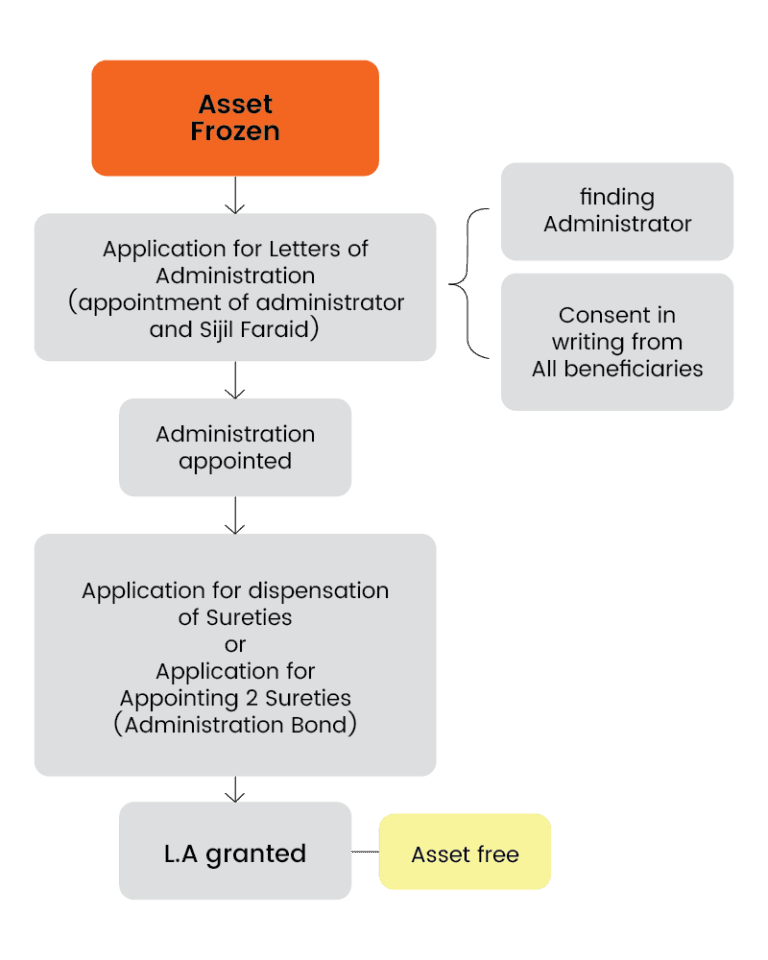
- Assets are frozen.
- An application is made for Letters of Administration and a Sijil Faraid.
- An administrator must be identified and beneficiaries provide written consent.
- The administrator is appointed and surety requirements are addressed.
- Letters of Administration are granted and the assets can be released.
Testacy (with a Wasiat)
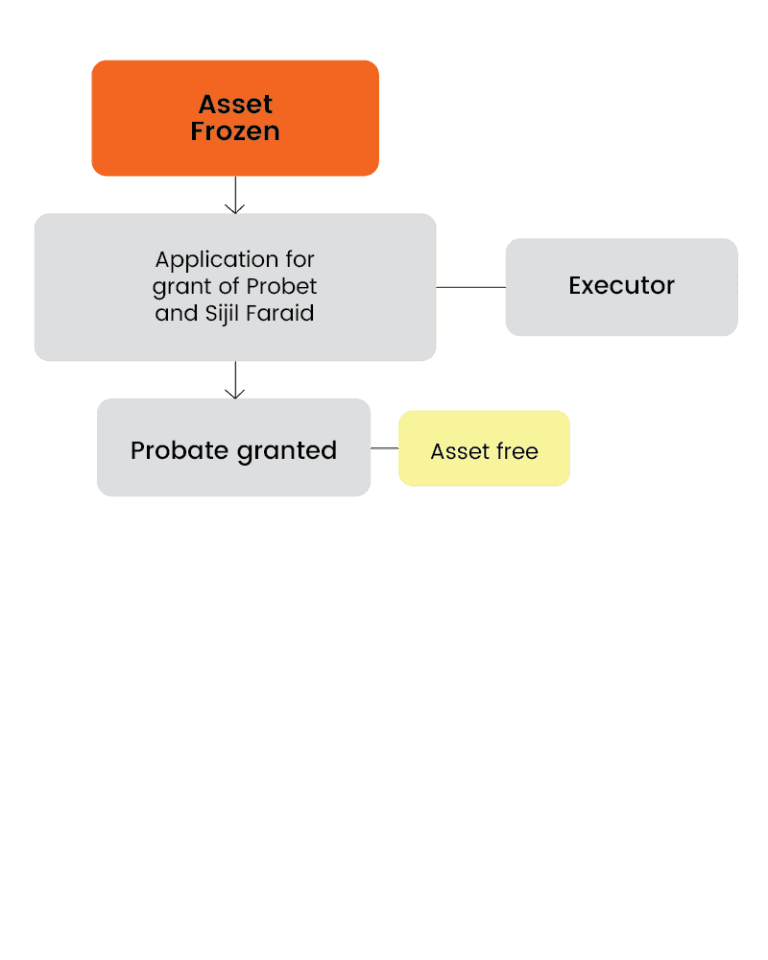
- Assets are frozen.
- The named executor applies for a Grant of Probate and a Sijil Faraid.
- Probate is granted and the assets can be released.
Source archive
Newspaper highlights
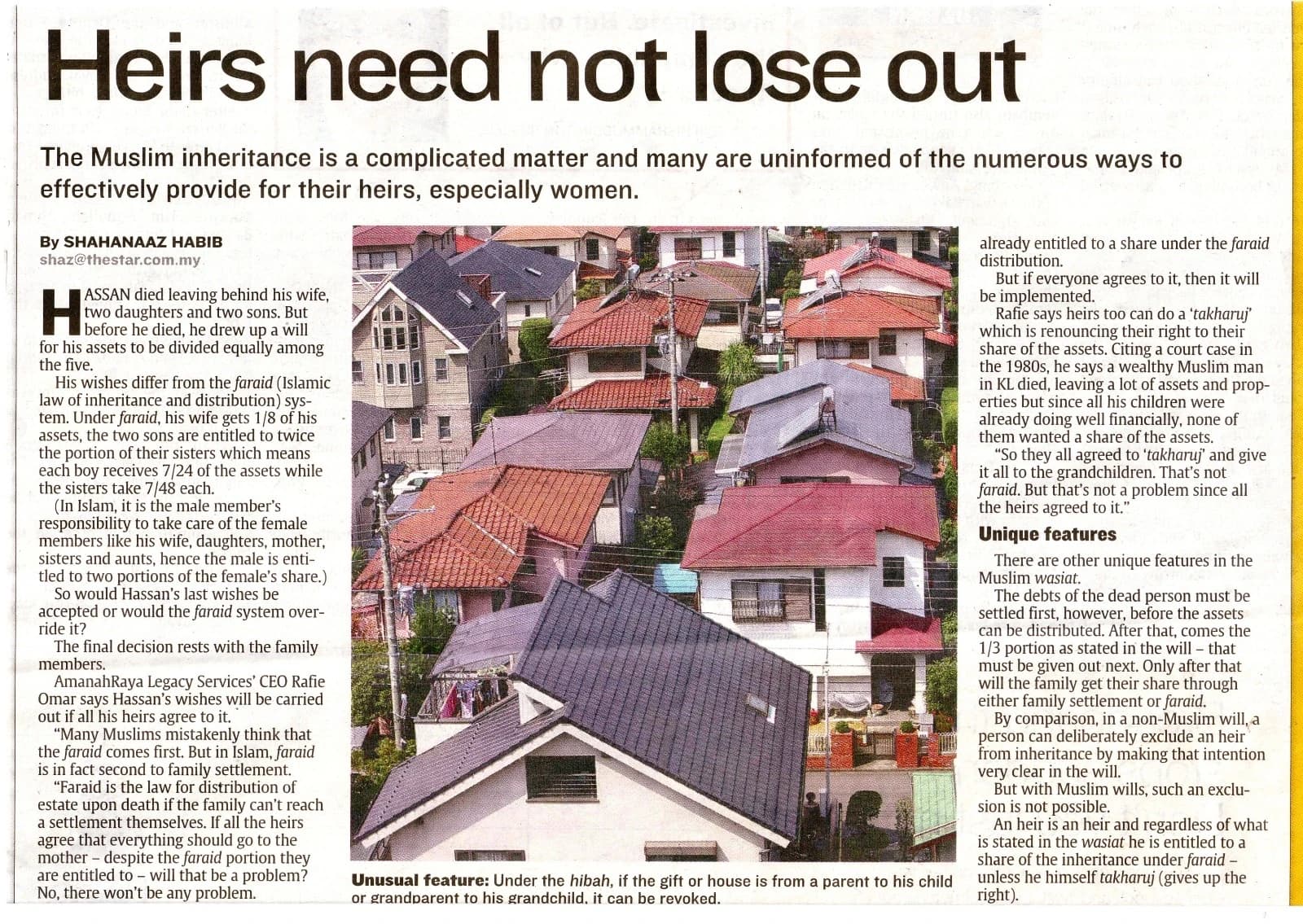
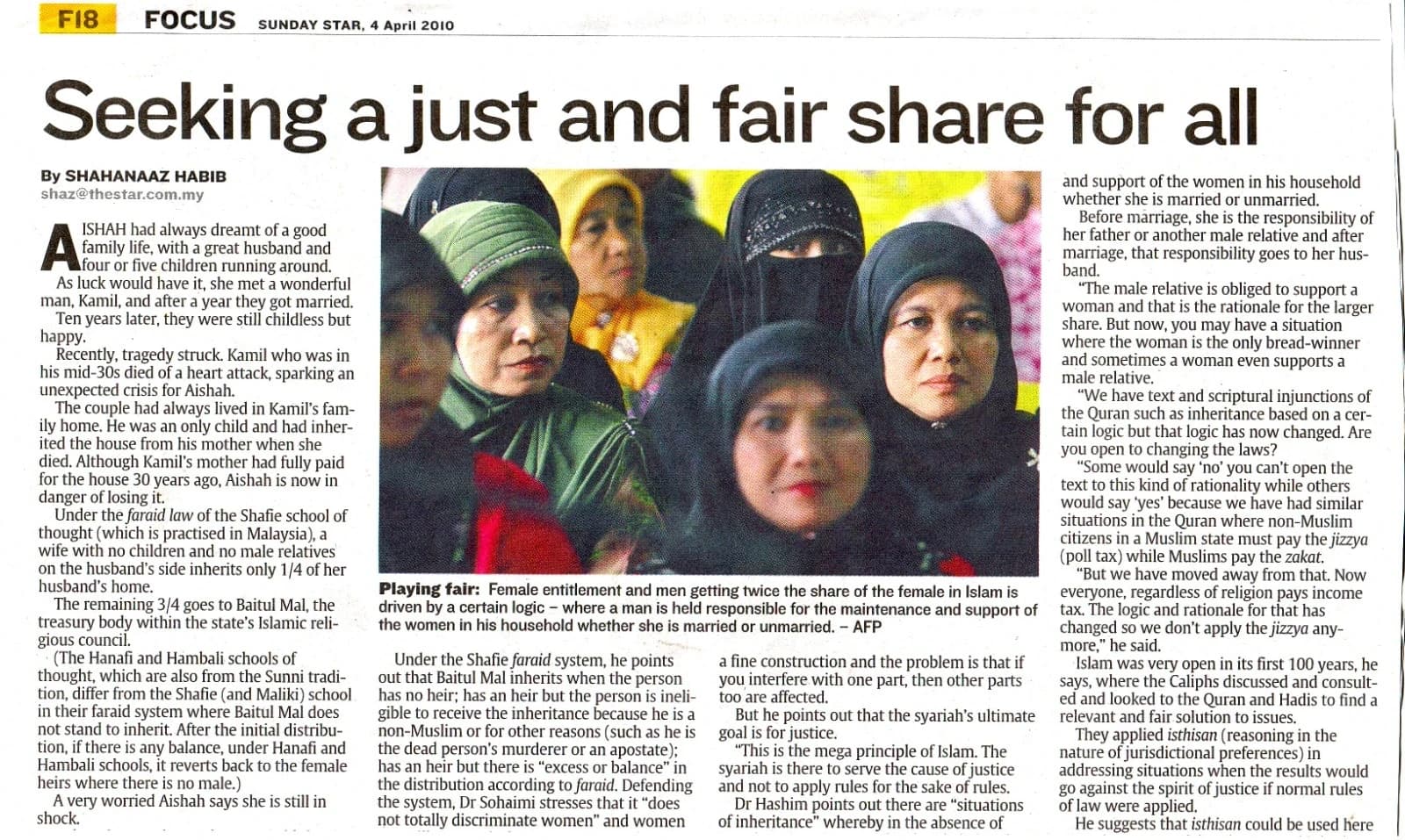
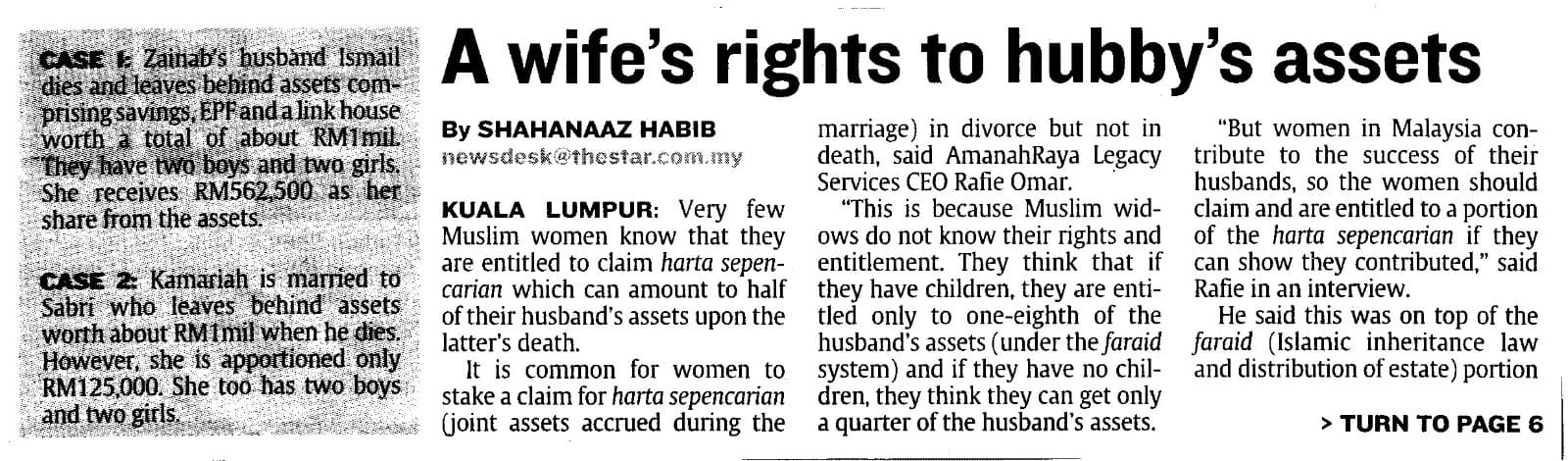
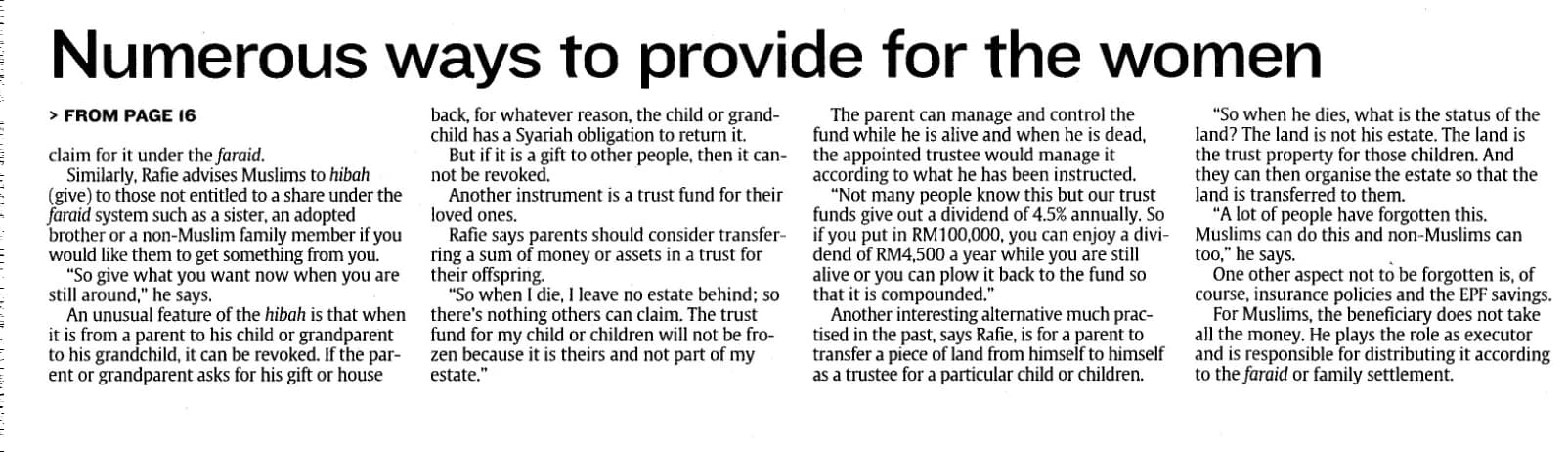
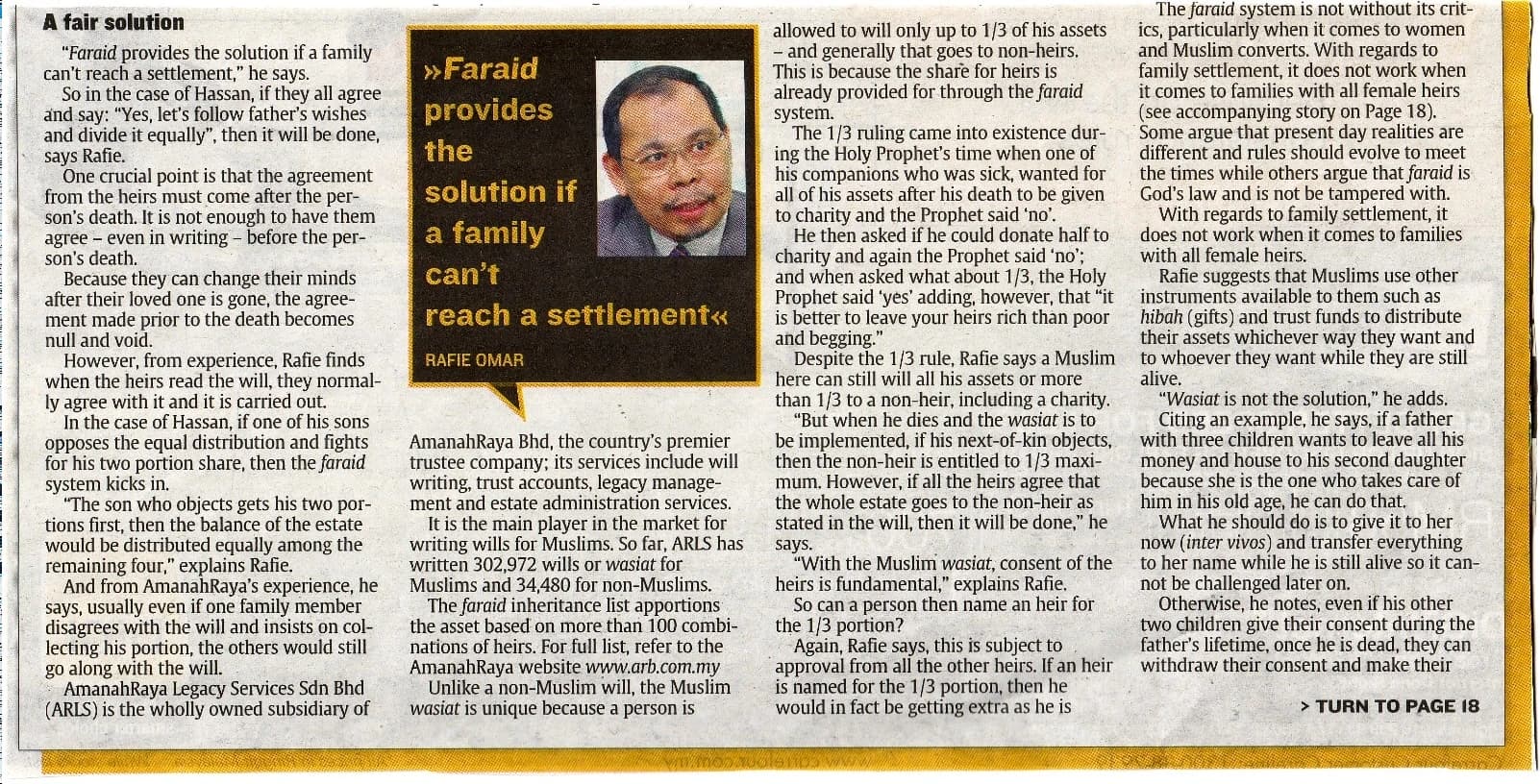
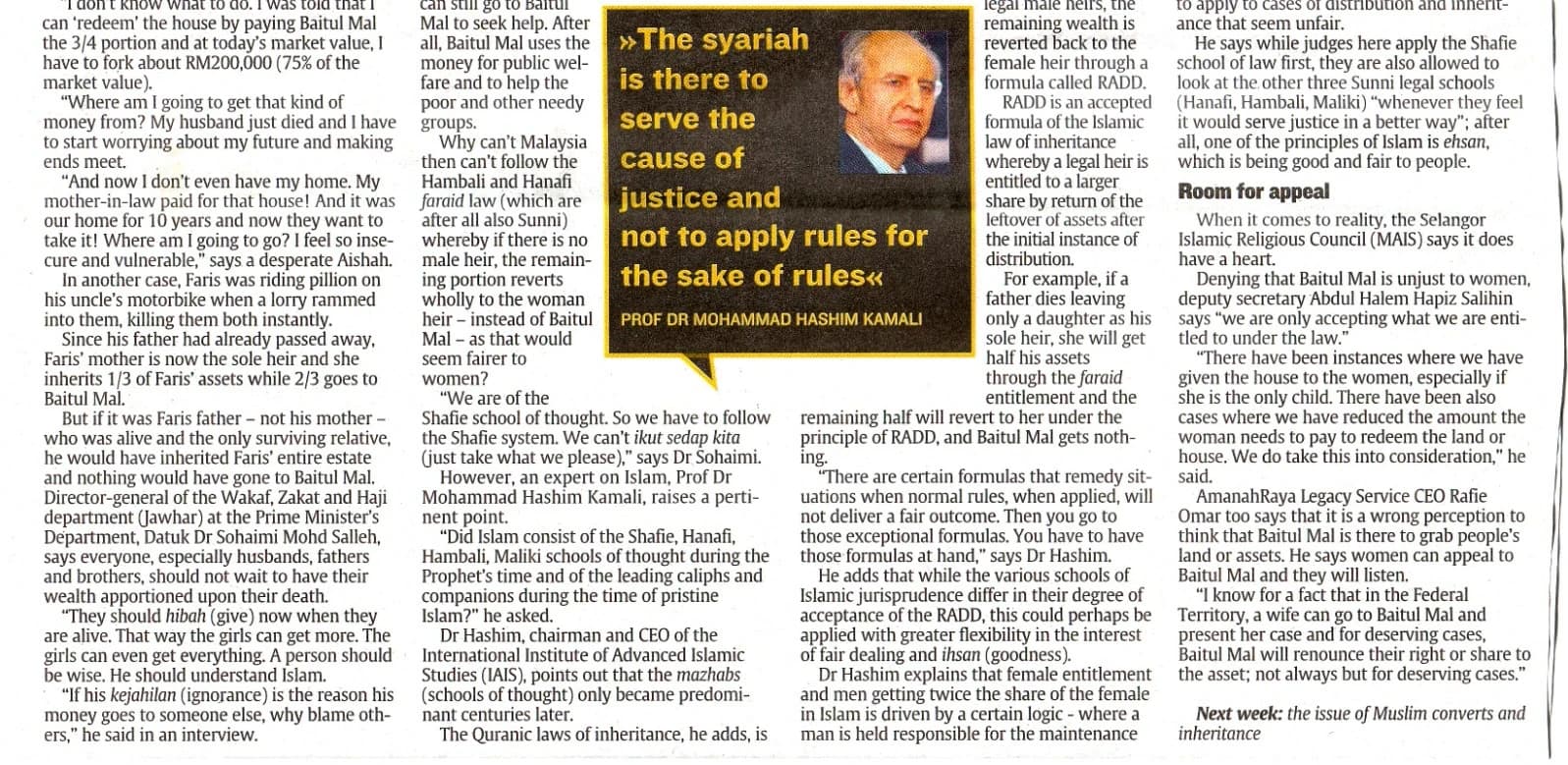
These archived clippings discuss Malaysian inheritance, Faraid, Wasiat, hibah, trusts and harta sepencarian. The complete original clippings are shown below.

Click below to find out more!


Take the next step
Have you written your Wasiat?
Wasiat writing is essential for people with assets, family members and liabilities. It should be completed while you are of sound mind and healthy.
We specialise in Islamic estate planning and can help you prepare a Wasiat around your needs and Islamic law.
“It is not permissible for any Muslim who has something to bequeath to stay for two nights without having his Last Will and Testament written and kept ready with him.”
Prophet Muhammad S.A.W., narrated by Abdullah bin Umar
You have the right to decide who will manage your estate and how it will be distributed after your departure.
Contact us