
Will Writing
书写遗嘱
Completing your life puzzle. Let your love end with no regrets.
完成生命的拼图, 让您的爱不留遗憾!
Planning partner

What is a will?
A will is a legal document that records your wishes for your loved ones and how your assets should be distributed after you pass on.
一份法律文件,其中声明您对亲人的愿望以及您去世后如何分配您的资产
Why is will writing important?
Provide for your loved ones
Record who you want to benefit from your estate and what you wish to leave to them.
保护您所爱之人的利益,确保他们能够获得您想要给予他们的资产
Reduce family disputes
Clear instructions help your family understand your intentions and reduce uncertainty over the distribution of your estate.
合理分配遗产,避免纠纷,保障家庭合睦
Plan for asset access and cash flow
Consider how your loved ones will manage while your estate is being administered, including possible delays in accessing assets.
避免资产冻结和现金流问题
A will does not remove the need for estate administration or eliminate all delays in accessing assets.
Estate administration timelines
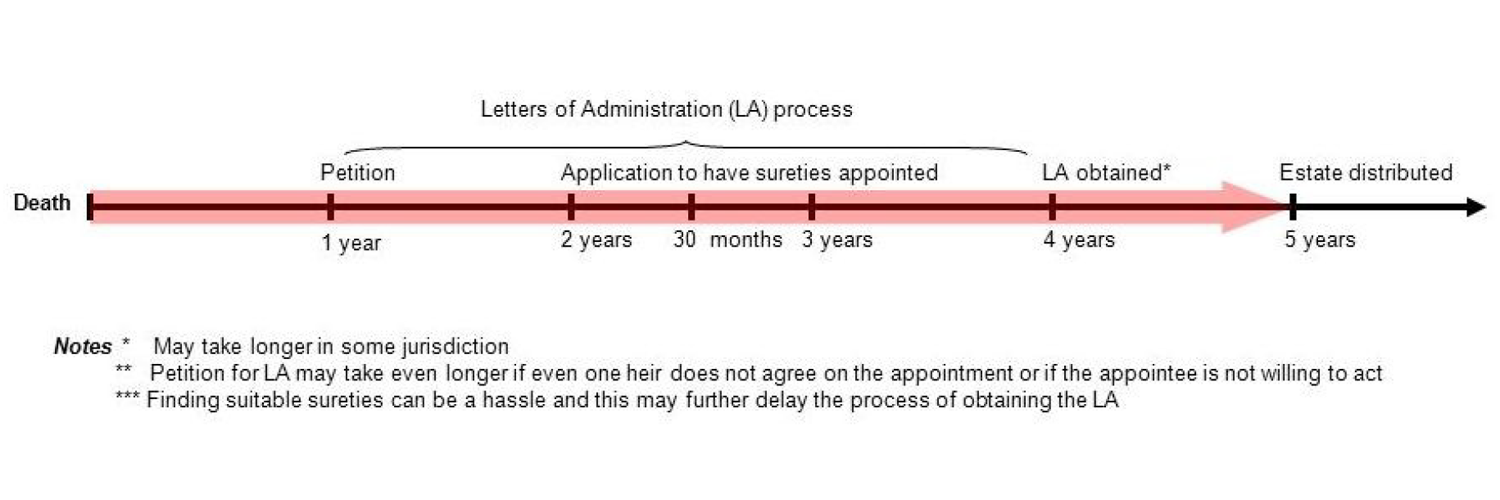
Intestacy (Without a will)
Timeline details
At death
Death
1 year · 12 months
Petition
The letters of administration (LA) process begins in this illustration.
2 years · 24 months to 3 years · 36 months
Application to have sureties appointed
The original illustration marks 2 years, 30 months and 3 years during this interval; these are time markers, not separate procedural steps.
4 years · 48 months
Letters of administration obtained
End of the illustrated LA process, from petition to grant.
5 years · 60 months
Estate distributed
- Obtaining LA may take longer in some jurisdictions.
- Petitioning for LA may take longer if an heir disagrees with the appointment or the appointee is unwilling to act.
- Finding suitable sureties may further delay obtaining LA.
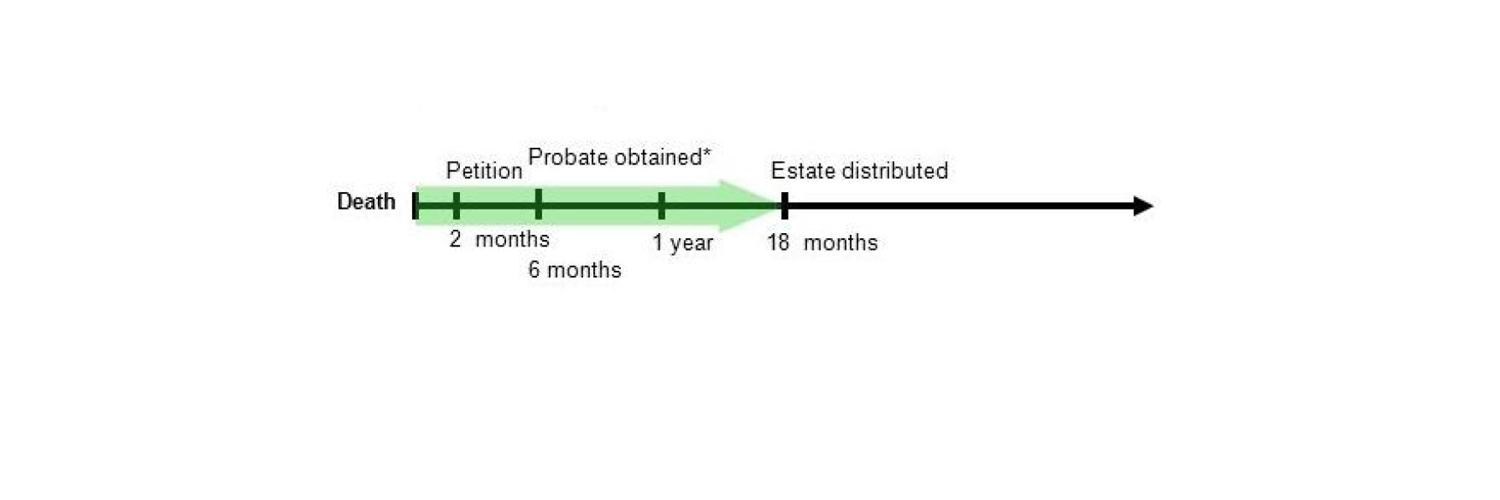
Testacy (With a will)
Timeline details
At death
Death
2 months
Petition
6 months
Probate obtained
18 months
Estate distributed
The original illustration also marks 1 year (12 months) between probate and distribution, without a separate event.
- These example timings are not a guarantee that probate or distribution will be completed within this period.
Select a diagram to enlarge. Timings are illustrative, not guaranteed; actual procedures and duration vary by estate.

Choosing who will carry out your wishes
Name an individual or trust corporation to carry out your wishes: realise assets where needed, settle liabilities and distribute your estate to beneficiaries.
An executor administers your estate. A trustee manages assets held in trust. The same person or corporation may carry out both roles.
Why consider Rockwills as trustee?
Continuity
A corporate trustee offers continuity beyond the lifetime or availability of an individual.
Accountability
Trustworthiness and accountability matter when appointing someone to carry out your instructions.
Professional expertise
Professional knowledge supports the administration of an estate and its responsibilities.
Private trusts for individuals
Specialist experience with individual private trusts supports planning for beneficiaries’ needs.
Higher standard of care
Professional care in managing assets and carrying out the terms of the trust is an important consideration when choosing a trustee.
Impartiality and security
Impartial administration and secure handling of assets are important considerations for your beneficiaries.
Management capability
Professional management skills support the practical work of administering assets and distributions.
Can I write my own will?
Professional guidance helps identify gaps, clarify responsibilities and address the legal requirements for your will.
Incomplete instructions
Without a suitable residuary clause, assets not specifically covered by the will may be left to the rules of intestacy.
Ambiguity affecting probate
Vague wording can create difficulties when applying for probate and carrying out your instructions.
Challenges in court
Problems with drafting or validity can expose the will to challenges and further disputes.
Unintended legal consequences
Wording that seems straightforward may have legal implications you have not considered.
Gaps in beneficiary protection
The arrangements may not fully address the needs of the people you intend to protect.
Conflicting responsibilities
Unclear roles or instructions can lead to conflicts between an executor and a trustee.
Unfulfilled intentions
A will may fail to achieve your wishes or address the concerns that prompted you to write it.
Start a Conversation
We’re here to help and answer any questions you might have. We look forward to hearing from you.